![]() |
||
![]() |
||||
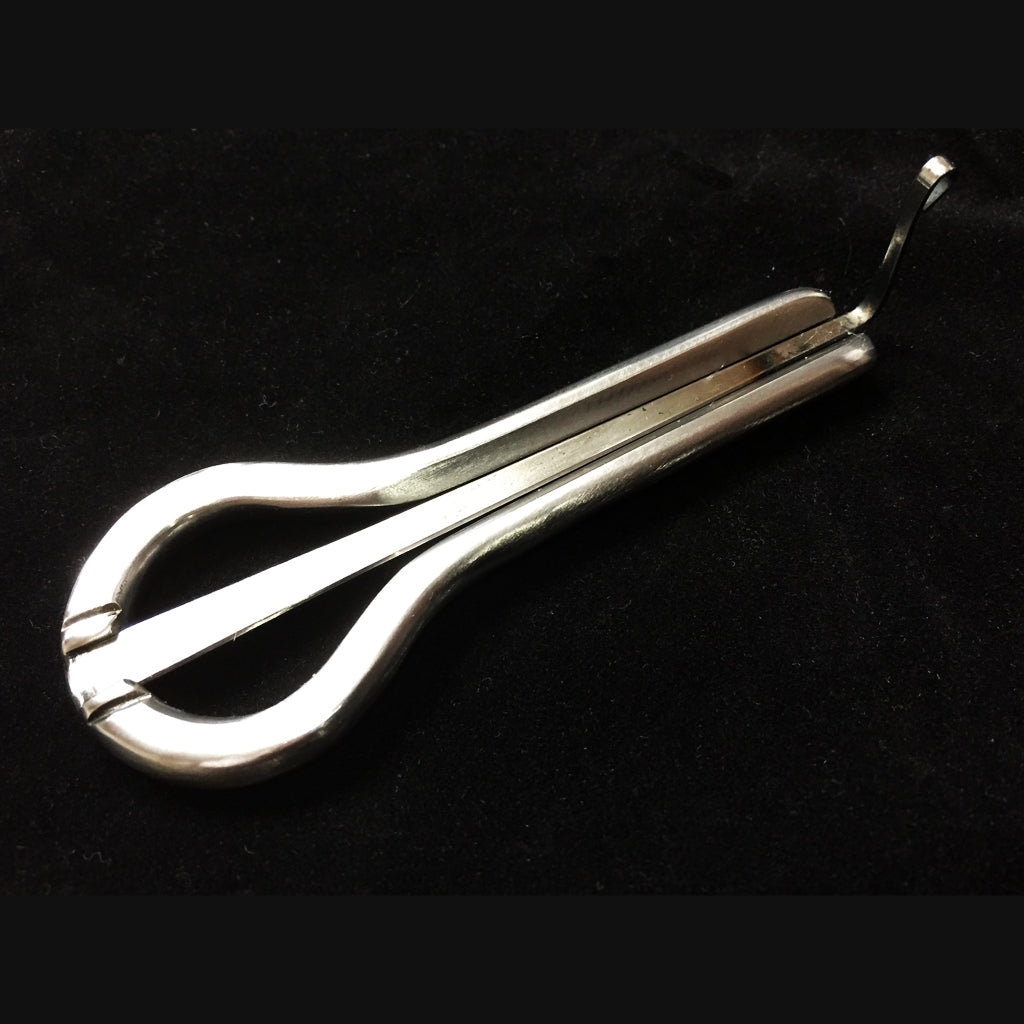
JEWS HARP INFO The name 'Jews Harp' is used predominantly in English speaking countries - the lack of apostrophe denotes no ownership - the name has nothing to do with Jews or the Jewish faith. The name is thought to originate in Tudor England and is either a mis-quote of Jaw Harp or derives from the Old English Gew-Gaw (a play thing). The instrument we call the jews harp exists in many forms, and is found on almost every major continent and has countless regional names and variants. Classed as a plucked idiophone, an instrument that produces sounds due to the rigidity and elasticity of the material from which it is made without the need for strings or a stretched membrane, the origins of the jaw harp remain mysterious. In Europe, jaw harps have been discovered in archaeological sites dating from Roman times and it seems to have become rather popular in Medieval Europe with many examples coming to light in England, Germany, France and Italy. An even earlier form has been excavated in China and dated to C1,000 b.c.e. It is almost certain that other forms of the instrument were used prior to this date, but were likely to have been made from materials less able to survive the ravages of time, such as bone, bamboo and wood. PLAYING THE JAW HARP When playing a metal, shaman's style jaw harp (similar to the Western style jaws harp found in music shops), the instrument rests directly on the players teeth, and when plucked, produces a lower pitch drone which passes directly into the teeth and jaw of the player. From here the vibration passes easily into the skull and the combination of the lower drone and the higher harmonics produced can quickly have a profound effect on the brainwave state of the player. Scientific studies have shown that certain frequencies can induce 'frequency followed effects' where the brainwaves slow down and allow deep relaxation which allows entry to altered states of consciousness. Jaw harps are held by firmly grasping the frame with the first two fingers and thumb of the left hand and held up to the mouth. The last couple of centimetres of the harp are in direct contact with the front teeth, with the jaw slightly parted. The first two fingers of the right hand are then used to pluck the tang, usually plucking toward the face rather than away from it. The tang will then oscillate rapidly to and fro, and pass in and out between the gap in the teeth, so care must be taken to get the gap right or it will hit your teeth. The resulting vibration of the moving tang passes from the harp into the teeth, jaw and mouth cavity which acts as a resonant chamber, and makes the playing seem more immediate and intimate than many other musical instruments. Some larger metal jaw harps will need a good deal of care to keep them in contact with the teeth while they vibrate. The shape of the mouth will amplify the natural pitch of the instrument to produce a springy sounding, rhythmic drone-like note. Thereafter the skill in using a jaw harp for shamanic work comes with controlling the resulting sound by use of the tongue, lips, jaw, glottis, voice, lungs and diaphragm. It is, in short a very physical instrument and leads to the feeling that, although the jaw harp is providing the initial vibration, it is the player's body which becomes the instrument. As mentioned, the rhythmic nature of the jaw harp and the frequencies produced can induce a trance-like state and by altering the shape the tongue and mouth cavity, a vast array of harmonics can be accessed, making it possible to mimic animal cries and natural sounds like dripping water and also to produce beautiful melodies and rhythmic lines. |
||||